Showing posts with label debuts. Show all posts

Tuesday, June 11, 2019

YA Guy Reviews... NELIEM by Clare Di Liscia and WASTED PRETTY by Jamie Beth Cohen!

YA Guy has a confession: I haven’t read much YA this year. There are lots of reasons for that, starting with the fact that I’ve been catching up on some literature I want to teach (and alas, I don’t have the opportunity to teach YA). But since I am YA Guy, I did read two really great debuts/new releases that I want to recommend. Both are similar in being the stories of young women growing to maturity during difficult times, though one is cast in the fantasy mode and the other in contemporary realism.

The first is Neliem, a YA fantasy by debut author Clare Di Liscia. This action/romance is very much in the “kick-butt heroine” vein, which I don’t always enjoy; at times, I feel that the character of the strong, capable, physically active YA heroine has become a mere reflex on the author’s part without context or nuance. Happily, that’s not the case with Neliem, which offers a fully realized, flesh-and-blood main character who kicks her share of butt while remaining complex and convincing.

The narrator and protagonist of Neliem is Oriana, a teenage girl living in squalid poverty on an island nation that’s fallen under the control of the mainland conquerors her people name Untouchables. Her prospects are bleak; many of her fellow islanders have died of the plague that almost took her, and those who survive eke out an existence of penury, servitude, and near-starvation. Oriana draws strength by imagining herself as the legendary hero Neliem, a savior of the poor and unprotected. But when Ezra, an Untouchable boy possessed of all the wealth and power Oriana can only dream of, unexpectedly chooses her as his bride in a coercive ceremony she has little choice but to obey, she’s whisked away to an alien world and forced to live in the household of a husband she can’t trust. Whether she can become the hero she longs to be drives the action of this novel, as Oriana uncovers the truth of the Untouchable culture and of the boy who claims to love her.

I won’t give away whether Ezra truly loves Oriana, but I will give away that I did. She’s a remarkable character, fiercely drawn and richly layered, provided with a credible personal and social history that makes her thoughts, feelings, and actions utterly believable. She can be scared and overwhelmed one minute, risk-taking and bold the next—but she’s never, from first page to last, anything less than fully real. The world she inhabits took me a bit longer to settle into, probably because Di Liscia doesn’t rush the world-building but lets the details emerge gradually. This approach makes sense, inasmuch as we’re discovering the world through the relatively inexperienced Oriana’s eyes, learning it as she does. The result is a fascinating plunge into an alternative reality that feels both fantastic and familiar, which is what the best fantasy novels achieve.

From YA fantasy, I turn to YA contemporary realism with Jamie Beth Cohen’s debut novel Wasted Pretty. I’ll admit I was sold on this book from the first page, which opens on a summertime film screening at Flagstaff Hill in Pittsburgh’s Schenley Park, circa 1992. Yes, these screenings are real—they’ve been going on for years, and in fact my first date with my wife was at one such event! So as a lifelong Pittsburgh resident, I had an immediate connection to the world Cohen recreates.

That wouldn’t have been enough to hold my interest, though, if the main character's story weren’t equally strong. Cohen’s narrator is sixteen-year-old Alice Burton, daughter of a radio DJ and a mother who’s developed a line of health foods (and tested them on her daughter, enabling Alice to shed pounds and show the world a newly curvy body). That’s good in one respect—it attracts the attention of college student and aspiring grunge rocker Chris Thompson—but it also garners the unwanted advances of professional baseball player and family friend Karl Bell. An act of sexual assault traumatizes Alice just as other parts of her life seem to be falling apart as well: her dad’s gambling addiction is preventing him from keeping up with tuition payments to her private high school, her relationship with her best friend is feeling the strain of boyfriends and beer bashes, and the enigmatic Chris Thompson clearly likes her but won’t fully commit to her. Spanning a turbulent summer, Wasted Pretty paints an unsparing portrait of a young woman coming to terms with who she is and what she wants from life.

The disturbing scene in which Karl Bell assaults Alice is the novel’s centerpiece, with everything else connected to it in some way. But there’s no shortage of marvelously realized scenes to choose from in this novel (perhaps my favorite being the nicely understated scene in which Alice and her father overcome their estrangement to share a meal at the neighborhood Friendly’s). Cohen gets the local and period details right, delving into the music groups, hair and clothing styles, and high school party culture of the day; she also gets the interior details right, with Alice’s pain, confusion, hopes, and anger coming through with perfect timing and clarity. The butterfly on the book’s cover becomes a multilayered symbol for the transformation Alice undergoes, with all its struggles, possibilities, and triumphs intact.

You don’t need to know Pittsburgh to love Wasted Pretty. You just need to know someone like Alice—and we all do.

Tuesday, May 7, 2019

YA Guy Hosts... Malayna Evans, Author of JAGGER JONES AND THE MUMMY'S ANKH!

YA Guy is excited to introduce debut author, friend, and agency sibling Malayna Evans, whose middle grade novel JAGGER JONES AND THE MUMMY'S ANKH comes out on May 28! To me, this historical fantasy-adventure, first in a series set in ancient Egypt, sounds like it rivals the Kane Chronicles series by Rick Riordan, so I can't wait to read it. I asked Malayna to talk about her path to publication, and she responded with a story that's both bittersweet and empowering for aspiring authors everywhere!
I always wanted to be a writer … in the same way my eleven-year-old daughter wants to be a mermaid. It’s not that I didn’t mean it. I did. I even went back to school to earn grad degrees in ancient history, in part because I thought a few fancy pieces of paper might magically transform me into the next Margaret George or Madeline Miller.

Then life happened. And believe it or not, my mermaid job never magically materialized.

And then, life happened some more. In the midst of a family crisis, I took my son, then nine, to lunch one day for a heart-to-heart. I don’t know how we ended up talking about ancient Egypt. At the time, we both adored the topic. (Sadly, one of us--now sixteen--has outgrown it). After a depressing debrief, perhaps we just wanted to lighten the mood. It’s the following moments that are still clear in my mind. He asked me what ancient Egyptians looked like. I told my beautiful, biracial son he’d fit in well. And he said someone should write a book about a kid who looked like him in ancient Egypt.

When my son and I drafted chapter one, it was a parenting exercise, something for us to work on together during a rough spot.

When I kept writing, it was a hobby to spend time on as I found myself with a lot more free time on my hands than I was accustomed to.

When I finished a full draft, tracked down real feedback, tossed the first manuscript in the trash, and started again, I began to wonder: could I really land a job as a mermaid?

I didn’t know at the time how hard it is for unpublished authors to get an agent, or find a publisher, or actually launch a book into the world. In retrospect, my naivete might have been a blessing.

I did know I wanted to write a book that featured bright, creative kids--kids like my two little people--on a memorable adventure in ancient Egypt. And I wanted to share my passion for history with middle school kids, and make it fun enough that they’d enjoy learning, or, better, not even realize there was learning involved.

When I landed an agent, I thought my big mermaid-break was just around the corner. Turns out, as hard as that was, it was only the start. Fortunately, my fabulous agent, Liza Fleissig, has the patience of a mollusk. She stuck with me, helping me improve the work until it was good enough to send out. It took a minute (okay, a few billion minutes), but eventually she found my series a home.

Book one, Jagger Jones and the Mummy’s Ankh, is scheduled to be released on May 28th from Month9Books. And no, it doesn’t mean I’m a professional mermaid now. Turns out, most authors need regular-old-human day jobs. But it’s a start. And the goals that animated my pursuit are in sight. If kids read this book and see themselves in Jagger and Aria, or discover an interest in the ancient world, I’ll coin myself a successful mermaid … and quite possibly track down a seashell-drenched tiara to don. Because mermaids may not be real, but celebrating life’s accomplishments should be!

About the Book: Jagger Jones is a whiz kid from Chicago's South Side. Ask him anything about Ancient Egypt, and Jagger can fill hours describing all that he knows. But when he and his precocious little sister Aria fall more than three thousand years back in time to the court of Amarna, Egypt, Jagger discovers a truth that rocks his world: books don't teach you everything there is to know. Mummies, pyramids, and cool hieroglyphics make awesome movie props, but the ancient court of Amarna is full of over-sized scorpions, magical amulets, and evil deities determined to scare unwanted visitors away. If Jagger and Aria are to return safely home, they must find nine soul-infested gemstones, defeat an evil general, save the royal family, and figure out how to rescue themselves! Armed only with Jagger's knowledge of history and a few modern objects mined from his pockets and Aria's sparkly purse, the siblings have exactly one week to solve supernatural riddles and rescue the royal family. If they can pull it off, Jagger Jones just might return to Chicago a hero.

About the Author: Malayna Evans, author of Jagger Jones and the Mummy’s Ankh, earned her Ph.D. in ancient Egyptian history from the University of Chicago. She’s used her education to craft a magical time-travel tale set in ancient Egypt for middle graders. Malayna lives in Oak Park, Illinois, with her two kids, a rescue dog, and a hamster named Pedicure.

You can learn more about Malayna on her website: http://malaynaevans.com
Or you can follow her on social media:
Twitter: https://twitter.com/Malayna
Instagram: https://www.instagram.com/malaynaevans/
Goodreads: https://www.goodreads.com/MalaynaEvans

To preorder JAGGER JONES, go here:
https://www.amazon.com/Jagger-Jones-Mummys-Malayna-Evans/dp/194867162X/

Tuesday, February 12, 2019

YA Guy Can't Wait for.. These 2019 Books!

YA Guy's always on the lookout for great books. Here are five from the first half of 2019--all but one of them for young readers--that I'm particularly excited about. I'll freely admit that I have a personal connection to each of the five authors (heck, I'll even tell you what that connection is), but at the same time, no one's paying or even prompting me to promote their books. I've listed them in order of release date--and the first one on the list comes out a mere week from today!

Louise Cypress, NARCOSIS ROOM (February 19). We share an agent and (sort of) a moniker--she's the YA Gal, I'm YA Guy--but one other thing we share is a love of twisty, creepy sci-fi stories. Her latest, set in a world where one's looks and identity can be surgically enhanced--or destroyed--will definitely freak you out in the best possible way.

Jessica Khoury, LAST OF HER NAME (February 26). I've loved Khoury's books since her debut, ORIGIN, and I love space operas. (I also love the artwork she drew for two of my own recent novels.) Her latest is a sci-fi retelling of the Anastasia story set in a distant galaxy, and it's just what I need to get through the wintertime.

Kat Ross, INFERNO (March 15). Way back in 2014, Ross and I met as members of a debut YA novelists' group. Since that time, she's put out some of the highest quality fantasy novels I've read, including two series that span the centuries and are linked by common characters. INFERNO, the final book in the Fourth Talisman series, promises to be yet another wickedly fun adventure into the worlds of the weird, the monstrous, and the undead.


Cadwell Turnbull, THE LESSON (June 18). Currently one of the rising young stars in science fiction, Turnbull was once a student of mine at the college where I teach. But trust me, I didn't teach him how to write this novel, a wildly imaginative tale of an alien race that settles for unknown purposes in the U.S. Virgin Islands.

Nick Courage, STORM BLOWN (July 16). Pittsburgh author Courage writes the kind of books my kids loved when they were still kids. (Now the one in high school reads ancient history, and the one in college reads what she has to read for her classes.) His latest, which focuses on children battling a hurricane, sounds like a high-energy thrill ride.


Wednesday, January 23, 2019

YA Guy Hosts... Erica George, author of WORDS COMPOSED OF SEA AND SKY!

YA Guy is delighted to introduce my friend and agency sibling, Erica George, whose debut YA novel, WORDS COMPOSED OF SEA AND SKY, will be published in 2021. That seems like a long way away--but as Erica so eloquently narrates in the following post, her writing journey, like so many others', has been long and unpredictable. (I can relate: though I've wanted to be a writer since age eight, I didn't publish my first novel until age forty-nine.) For all of us who dream of publishing novels, Erica's story is a true inspiration.

So enjoy the post, and make sure to follow Erica on Instagram and Twitter so you can keep track of her as she continues her journey!


Benjamin Churchill first appeared to me when I was thirteen years old. It was a rainy December night, and my family and I were driving home from having seen a production of A Christmas Carol put on in Princeton. I was consumed by the concept of change, whether we were all capable of change, or if, for some of us, it was too late.

I think that’s why he materialized that night, riding a horse, keeping pace with the car—to help me explore this question.

When I got home, I crawled into bed, pulled out my trusty notebook from the nightstand (I still keep one there, by the way), and wrote down everything I knew about Benjamin Churchill, a character that would stay with me for twenty years.

He’s changed a lot since then. He’s been British, he’s been American, he’s been in the Navy, the Army, and then finally I decided he was going to be a whaler. He’s been surrounded by multiple casts of characters, he’s been the main character, and now he’s a supporting character. He’s also been shelved for most of this time.

I’ve always been a writer, a teller of stories, but I didn’t think I was capable of being published until after college. I had just completed my teaching degree and was working with a group of fifth graders. We were reading a fairy tale retelling (that no one was particularly fond of), and one of the students said, “You know, I think you could write a better version of this.”

It was a challenge, but I did it. Having no idea what to do with a completed manuscript (well, at least I thought it was completed), I sought the advice of my neighbor who I knew was a writer as well. She invited me to join her writer’s group, and that’s where everything really started coming together for me.

Writing is a fairly solitary occupation, and it’s easy to be intimidated and keep your work to yourself. This was the first time I was sharing my writing with a group of like-minded people. I received feedback (some positive, some constructive—mostly constructive), and I kept working. Finally, when I felt like I had polished my fairy tale retelling, I decided to attend the New Jersey conference of the Society of Children’s Book Writers and Illustrators (SCBWI). Something must have possessed me, because I also signed up to pitch my book to an agent.

As I waited in line for my turn, I kept rereading my pitch, trying to memorize every word. I was shaking. I was sweating. I could just picture myself trying to describe my book, something so personal and close to me, to someone who just wouldn’t be interested or see my vision. Finally, I sat down in front of Liza Fleissig, took a deep breath, and got halfway through my pitch before she stopped me and said, “I want you to send me the whole thing.”

You’d think the shaking would stop there, but no. Cue more incessant nerves.

Liza signed me as an author at the Liza Royce Agency in 2014, and I was positive, absolutely certain, that it would be smooth sailing from that point forward.

Only no one can truly prepare you for your personal voyage to publication. I figured that because it had been so easy to secure an agent, my book would obviously be snapped up in a second by an editor. That book ultimately didn’t go anywhere. My next two made it farther than that, but ultimately went nowhere as well.

Writing is hard, and giving up is so much easier. But I’ve wanted to be an author since I was little, since I sat in the children’s section of my local library, piling up books to bring home and devour. Books were my constant, and I knew that simply reading stories wouldn’t satisfy me forever. I had to write them. I had to hold my own book in my hands.

It was only this past year that Benjamin Churchill resurfaced for me, and this time, he took the form of a Yankee whaler. He was always tied to the sea, but I finally realized where he belonged, what his story actually was.

My Young Adult novel, Words Composed of Sea and Sky, debuts in Summer 2021 from Running Press Kids/Hachette. It’s told in two alternating points of view, one of Michaela, a girl living on present-day Cape Cod, writing poems in an effort to escape her home life, and the other of Leta, a girl living in the same town but during the height of Yankee whaling, who also uses poetry to escape the social conformities of her time.

You’ll find Benjamin Churchill among the pages, too.


About Erica: Erica George is a writer of Young Adult fiction and a graduate of The College of New Jersey with degrees in both English and education. She resides in scenic Hunterdon County, New Jersey, but spends her summers soaking up the salty sea air of Cape Cod. Many themes of Erica's writing rotate around environmental activism and helping young people discover their voices. You can find her writing, whale watching, or engrossed in quality British drama with her dog at her side.

Twitter/Instagram: @theericageorge

Tuesday, December 11, 2018

YA Guy Hosts... Jamie Beth Cohen, author of WASTED PRETTY!

As you can tell from my past several months' posts, YA Guy loves hosting debut authors, especially when they live in my hometown of Pittsburgh. But it gives me particular joy to host Jamie Beth Cohen, whose debut novel WASTED PRETTY comes out in April, 2019. I first met Jamie years and years ago when I was a counselor at a day camp in Pittsburgh and she was (no kidding) one of my campers, so to see her succeed as a writer is the next best thing to watching one of my own children grow. Now, before I embarrass myself (or Jamie) even more, let's hear from her on the artistic and commercial sides of being a debut author!

Have you seen this image floating around the interwebz? I love it!


Writer Erin Dorney made these suggestions, and I think they really speak to the fact that although publishing is a business, there are still ways we can engage with it that don’t involve money. 

As a debut author, with a young adult novel coming from a small press in April 2019, I’ve been thinking a lot about how I want to engage with the commercial side of my art. 

And let me just stop myself right here, because I actually don’t consider myself an artist. I tell stories in order to connect with other people and -- if I’m doing it right -- the stories will help them in some way. A reader might feel less alone after reading something I’ve written or might feel better about a tough choice they’ve made after seeing how tough choices are handled in my work. Whatever it is, language and craft are not my top priority. It’s the connection to others that is most important to me.

Art is amazing. Art is important. I love art! And maybe some people consider what I do art, but if they do, I hope they’re talking about the kind that is accessible to everyone and integral to life, not the kind that is set apart from it (hung on walls in expensive museums or unintelligible without an advanced degree).

But I digress…

The truth is, I want my book to be widely read, not because of any monetary goal, but because I did that thing people tell young adult authors to do: I wrote the book I needed when I was a teen, and I believe there are teens out there today who still need it. 

To get the book into the hands of people who don’t know me, I have to engage with the commercial side of publishing. To that end, I have to spend money -- money I don’t really have -- to promote my book in various ways. I will throw parties, I might do giveaways, I may pay for ads, and to make up that money, I will need to sell books.

This is the vicious cycle of capitalism that many writers don’t want anything to do with. They feel it corrupts their art or takes time away from writing, but, as I said, I don’t consider myself an artist. I feel this story is important and to get it out there, I’m going to jump in with both feet and try to figure out this balancing act.

Side Note: Here’s another paradox that people have been asking me about lately: I will make about five times as much money per book if you buy it directly from me, but sales I do “out of my trunk” don’t count in the measure of “how well” my book is doing. My book will be available online directly through my publisher, on Amazon and through other outlets, but in order to quickly make up the money I spend to promote my book, I’m going to have to sell a fair number of copies “out of my trunk.” 

And to be clear, it’s not just small press authors who have to spend their own money on these things. Check out Josh’s great post about what he spent promoting his debut (which came out with a big house) and his other great post about what worked and what didn't.

So, all of Erin’s suggestions above on ways you can help an author are great, but there are some things my writer-heart and my writer-brain are struggling with right now. Taking the lead from Josh, I’m letting you in with the hope that transparency is the way to go. Because people ask all the time how they can support my debut, but I’m never sure if they really want the truth…

My writer-heart wants you to love this story.
My writer-brain wants you to buy this book for yourself, your family, and your friends!

My writer-heart wants you to buy enough books through your local indie bookstore that the next time I want to sell a story, people think I’m a safe bet.
My writer-brain wants you to place an order with me so I can recoup my marketing costs and maybe see a movie with my family.

My writer-heart wants to sit over coffee and talk to you about this story.
My writer-brain wants you to tell everyone you know to buy this book!

My writer-heart wants you to write honest reviews on Amazon and Goodreads.
My writer-brain wants you to keep your criticisms just between us. Tell me what you think so I can be a better writer, but please don’t put me on blast.

My writer-heart wants to travel the world visiting my friends and coming to book clubs they set up with their friends.
My writer-brain knows I don’t have the kind of time or cash to make this happen, but I hope I can video-chat with lots of fun book clubs.

My writer-heart wants you to buy my book and love it without me ever having to mention it again.
My writer-brain knows it takes roughly seven mentions to influence behavior... apologies in advance…

About Jamie: Jamie Beth Cohen is a writer, storyteller, and community organizer whose writing has appeared in TeenVogue.com, The Washington Post/On Parenting, Salon, and many other outlets. WASTED PRETTY, her debut YA novel about a sixteen-year-old girl who faces wanted and unwanted attention when she accidentally goes from blending in to standing out, will be published by Black Rose Writing in April 2019.

Stalk Jamie here:


Wednesday, November 7, 2018

YA Guy Hosts... Natasha Garrett, author of MOTHERLANDS!

YA Guy is super excited to introduce my friend and colleague--and fellow writer--Natasha Garrett, whose debut collection of essays, MOTHERLANDS, is available now! A book that explores the modern migrant experience, MOTHERLANDS is particularly timely in today's social and political climate. Natasha talks openly about her experience as a writer in the guest post below, and then you can find out more about (and order a copy of) MOTHERLANDS! 


AN OCCASIONAL WRITER

I am curious about other authors’ writing spaces and habits the way some people are interested in celebrity homes. Some writers, like Hemingway and Dickens, wrote while standing; in contrast, Truman Capote wrote while lying on his couch. Mark Twain’s office was painted mauvish-pink and contained a pool table. Benjamin Franklin wrote in the morning, after waking up and stripping naked. I enjoy learning these tidbits and browsing through photos of writers’ offices, because I am being reminded of the behind-the-scenes work that happens before a book is finished, and the various routines and locations that support one’s writing life. I am also a bit envious of the writers, famous and not-so-famous, who allow themselves the time and space to write with regularity.

In my recent collection of personal essays, Motherlands, I write about my discomfort with calling myself a writer, because in many ways, I feel like an outsider to writing. I have a full-time job that doesn’t require literary skills, a busy family life and a great social circle. My approach to writing lacks the routine and the structure of many of my favorite writers: I don’t set aside a time to write. I don’t have a designated workspace in my house for writing—no pretty desk with a view; actually, no desk at all. I don’t belong to a writer’s group. I have never attended a writing workshop. I write in English, my second language. Perhaps not labeling myself a writer is a defense mechanism: I am free of all the pressure, expectations, anticipation, and disappointment that real writers seem to experience. It may be a way of creatively avoiding the responsibility of regular writing while claiming all the pleasure from it.

Desk or no desk, writing and publishing essays, poetry, and translations inevitably makes me a writer. I don’t have a writing schedule, but I do have a method; otherwise, nothing will ever be done. I am not a freewriting-type of person, though I swear I have tried to be. Once I get an idea for an essay, I let it live in my head for a while. I work on it in my mind as I am doing something else, like driving or taking a walk. Once I know what the opening paragraph or two will look like, I start writing. The act of writing typically generates more ideas, and I slowly but steadily unspool the essay. Since the piece lives in me for quite some time before it sees the light of day, my first draft is not that removed from my final draft. I let it sit for a few days, and I go back to it for revisions. I often ask a trusted friend (a “real” writer) to read it before I deem it finished and ready for submission.

Not being “only” a writer gives me a wider field of inspiration to draw from. As a Macedonian living in the US, an international student advisor, a mother to a bilingual child, a wife, a translator, a traveler, an avid reader, and an occasional and somewhat hesitant writer, I draw from a range of personal and professional experiences--which are often in conversation with one another—when I write personal essays like the ones in Motherlands. This collection in particular benefits from the weaving of the professional, personal and literary, because it tackles topics that are naturally multidisciplinary, such as cross-cultural living (cooking, gardening), language, identity, and education.

I have two writing projects percolating at the moment—an idea for a novel (part travelogue, part love story) and a poetry collection. I’ll let them live in my head for a bit longer, but eventually, I will have to sit down and start writing, perhaps at my own desk this time.

About MOTHERLANDS: In this collection of personal essays, Natasha Garrett explores various facets of the modern migration experience. Weaving academic and literary sources, as well as personal and professional experiences, Garrett uses transnationalism as a springboard for discussing topics such as home, motherhood, identity, bilingualism, family, education, and travel. The essays in Motherlands offer a well-researched, witty and heartfelt look into migration both as a global phenomenon and as a deeply intimate experience.

Buy MOTHERLANDS here: https://www.amazon.com/Motherlands-Natasha-Garrett/dp/1897493665

About Natasha: Natasha was born and raised in Macedonia and lives in Pittsburgh, Pennsylvania, where she serves as a Director of International Student Services at La Roche College. Her poetry, personal essays, and translations have appeared in Transnational Literature, Gravel, Allegro Poetry Magazine, Arts and Letters, and other publications. She is the editor of Macedonia 2013: 100 Years After the Treaty of Bucharest. She obtained her PhD in Education at the University of Pittsburgh, and her Master’s in English Literature from Duquesne University.

To find out more about Natasha's books and the events where you can meet her in person, visit her website: https://natashagarrett.pittsburgh412.com

And if you're in Pittsburgh, you can come see Natasha speak at the Squirrel Hill Library next week:
https://www.carnegielibrary.org/event/meet-the-author-natasha-garrett/

Tuesday, October 23, 2018

YA Guy Hosts...Barbara Barrow, author of THE QUELLING!

One of the nicest things about being an author is meeting other authors--and authors-to-be! This year, YA Guy's been thrilled to see a number of friends realize their dream of authorship with their debut works of fiction or nonfiction. Though not all of these fellow authors write YA, I wanted to celebrate their achievements and spread the word about their books.

So I'm going to be running a series of guest posts over the next several months to do just that! First up is Barbara Barrow, whose psychological thriller THE QUELLING was published last month. Barbara has kindly written a post about her path to publication, and after you read her story, you can find out more about THE QUELLING and its author.


Ever since my debut novel, The Quelling, was released, people have asked me two questions. 

The first: What inspired your book? 

This one is easy! I love Gothic novels like Wuthering Heights and The Woman in White: sinister books about madhouses, gender, hysteria, and crime. So I wrote a contemporary Gothic novel about a couple of bloodthirsty siblings, a murder, and a rare psychiatric disorder. I told the story through multiple narrators: two sisters, their doctor, and their two nurses. 

The second question: How long did it take to get published? 

Well. 

This one is hard. The truth is, my road to publication was less a direct path and more of a long, meandering detour, the kind that can leave you feeling stranded and lost and desperately behind schedule. But just as a detour can make us slow down and pay attention to new scenery and unexpectedly beautiful vistas, so too did my winding path to publication teach me invaluable lessons about the publishing process, and about my own writing. 

The road to publication began with an email and a phone call from an editor at a small press. I had revised the manuscript five times, over the course of several years, and had been submitting for a few months when he requested the full manuscript and showed it to the lead editor. He liked the manuscript very much, he said, especially its elegiac and mournful mood. However, he felt that the characters’ voices needed to be “peeled apart” more, to be made more distinct, perhaps with different vocabularies and ways of speaking. Would I be willing to make revisions? 

Thrilled that a press liked my book, I said yes right away. And I began the revisions. I re-read and studied classic multiple-narrator books like William Faulkner’s As I Lay Dying and began to peel two of the first-person narrators apart. I gave my learned doctor character more of a scientific vocabulary and a clipped, businesslike tone, and my loutish nurse character Simon a frank, talky, and arrogant voice. I worked through a revision or two with my beta reader friend, and I sent the chapters in. 

Then…silence. 

Finally, the editor emailed back. He appreciated the revisions, especially to Simon’s chapter, he said, but he felt that with the new voices the book had lost some of the lyric, elegiac quality that he had admired so much in the earlier draft. What did I think about trying a close third-person omniscient narrator who could get into all of the character’s heads? 

So I went back to my desk. I studied novels with a close third-person narrator like Meg Wolitzer’s The Position, and, over the course of one bleary weekend, I switched my whole novel into third person. I sent the revised book back in, and waited. 

And waited. 

This was the hardest part. Months elapsed without much other than a few lines of acknowledgement, and I began to wonder if the novel would ever be published at all. I dallied. My creative life felt stalled. At the encouragement of my friend, I kept submitting the original version of the manuscript, since I hadn’t yet had much feedback on the third-person revision. And I waited and waited. It was a long, agonizing summer.  

At the same time, that interval deepened the third-person revision for me. I began to think of my characters in the third person. Whenever I read fiction or watched television I paid even more attention to perspective and point of view. Whenever I listened to a friend tell a story, I noticed the switch between the I and the They. In that time period, my novel went from being written in the third person to actually becoming a third person novel.  

Then, one day, I checked my email and found some correspondence from a small press that specialized in the “weird and strange.” Expecting another rejection, I clicked on it to discover the opposite: the editors had read my submission, loved it, and felt that the style was a great fit for the aesthetic of their press. Was the manuscript still available? 

I was elated. I reached out to writer friends (including YA Guy!) for advice, I parted ways cordially with the first editor, and in a week, I had a contract with the new press. A year later, after some revisions and some copy-editing, the book came out: with its original cast of first-person narrators. 

It’s tempting to think of my experience as roundabout: almost as if I had to walk in a very long circle in order to get back to square one. And there were days, especially during that long summer, when it felt that way. But the process taught me patience, and also a kind of creative flexibility, a willingness to re-imagine my characters and story and structure in radically different ways. 

It also reminded me that the editorial process is subjective. At the launch party for The Quelling, someone asked me about the revision process, and I talked about the third-person alternative version. Afterward, a colleague and writer friend who had read the book said, “Oh, I don’t think this would work in the third person at all.”

Was he right, and the editor wrong, or vice versa? Probably neither. In the end, I learned, the best stylistic choice is the one that a publisher and author agree is right for this story. There is another version of The Quelling that exists in an alternative universe, and I’m okay with that. It also taught me the importance of always submitting up until you have a signed contract in hand. It’s important to revise, of course, but it’s also important to find a press whose aesthetic vision merges with yours. 

Finally, the process taught me that editorial feedback has a long, rich afterlife. For my next novel, a multiple-POV book, I’ve been thinking a lot about the power of richly contrasting voices, about other uses for the different versions of the two characters I revised, and the lessons I learned from studying other books and re-thinking my own manuscript.

As it turns out, even a long, agonizing detour can be worthwhile.


Thanks, Barbara! Readers, when you dive into THE QUELLING, I think you'll be pleased to see that Barbara stuck with her vision and her gut (while also cultivating the flexibility to make the editorial changes needed). It's a taut, tense story with great characters and tone, and I can't wait for the next book to come out of Barbara's (dare I say slightly twisted?) imagination!


About THE QUELLING: Addie and Dorian have always been together. They're clever, beautiful--and hopelessly violent. Diagnosed with a rare psychiatric condition and accused of murder in childhood, the sisters have spent most of their lives in a locked ward under the supervision of eccentric researcher Dr. Lark. Now on the cusp of adulthood, Addie has a plan: start a new family to replace the one she lost. Dorian struggles to quell her violent tendencies in time to help raise her sister's child.

But Dr. Lark sees these patients as key to the completion of his revolutionary cure, and he will not allow Addie's absurd ideas to get in the way. As his "treatments" become increasingly bizarre, they put Addie and Dorian's safety at risk. The girls' only lifeline may be Ellie, a ward nurse with troubles of her own, who's never felt the need to protect anyone--until now.

Harrowing and bittersweet, at times claustrophobic, this gritty debut explores the fragility of familial bonds and the sometimes intractable tension between freedom and safety.

Order THE QUELLING from Amazon: https://www.amazon.com/Quelling-Barbara-Barrow/dp/1941360181
Or directly from the publisher: 

About Barbara: Barbara Barrow is a literary critic and fiction writer who loves all things Gothic and strange. Her short fiction has appeared or is forthcoming in Cimarron Review, The Forge Literary Magazine, Folio, and elsewhere. She is Assistant Professor of English at Point Park University in Pittsburgh. In her spare time she eats mangoes and binge-watches old seasons of Grey’s Anatomy. THE QUELLING is her first novel. Anca L. Szilágyi calls it a “ferocious, tender, astonishing” book that “lays bare our animalistic drives toward violence and love.”


Wednesday, March 23, 2016

YA Guy Interviews... Amy Allgeyer, author of DIG TOO DEEP!

Today on the blog, YA Guy's thrilled to interview Amy Allgeyer, author of DIG TOO DEEP, which comes out April 1! Amy took the time to answer my questions about her writing process and about the environmental issues in her debut novel, which concerns one teenage girl's effort to fight mountaintop coal mining in a small Appalachian town. You can read my review of this terrific novel right here.


And now, without further ado, here's Amy!

YA Guy: Hi Amy! Welcome to the blog. To start out, I'd love to hear about your journey to publication.

Amy Allgeyer: “A long time ago, in a galaxy far, far away…” That’s how it feels anyway. I decided to write my first book twelve years ago. I landed an agent with that book, but it didn’t sell. Since then, I’ve written many more books, lost an agent, found a dream agent, worked through revisions with agents or editors only to have them change jobs or leave publishing for good before we were finished. All in all, I had pretty much the same journey most authors have. We all get those wicked near-misses and crushing lows. Then we turn around and pour all that into the next book. Or we give up and don’t become authors at all. I very nearly did that, and the only things that kept me going were my crit partners.

YAG: I'm glad you stuck with it, because DIG TOO DEEP tells a really important story. Can you tell us about mountaintop coal mining? How did you get interested in it? How much of a problem is it?

AA: Mountaintop Removal Mining started back in the 1970’s. By 2009, over five hundred mountains had been blasted away. Nearly a million acres of forest are gone. The health issues speak for themselves: people living in MTR communities are fifty percent more likely to die of cancer, and babies born near MTR mines are forty-two percent more likely to have birth defects.

I was born in Kentucky. When I was seven, I moved to North Carolina with my parents but my six brothers and sisters (all older) stayed in KY, so I spent a lot of time driving back and forth through Virginia, West Virginia and Kentucky. The Appalachians represent home to me—even now when I live a thousand miles away. So it’s heartbreaking to see them blown apart, and know some special places are gone forever. And since MTR mining creates fewer jobs than traditional mining, it means these communities are stuck with less money, fewer jobs, more sickness, more death… It’s really awful.

YAG: So this sounds like a very important book to you. What was your research process like for DIG TOO DEEP?

AA: Involved! Even beyond the MTR research, there are aspects of the book that I (thankfully) don’t have personal experience with: prison, water testing, meth addiction, extreme poverty. My writing process was like: Write two pages. Google whether prisoners have access to email. Write another page. Google side-effects of methamphetamine addiction. I also depended a lot on my sister’s experiences volunteering in mountain communities in Eastern Kentucky. Her stories were so insightful and gave me a current and realistic picture of what poverty looks like in that area of the country. The cancer…that I know all too well, as my mom died of cancer. Those scenes where Liberty is caring for Granny were some of the hardest I’ve ever had to write.

YAG: They're also some of the best scenes in the novel, and I can tell they come from a very personal place. To shift back to the environmental issues: I’m from Pennsylvania, a major coal-producing state. What would your answer be to someone who said, “We need to continue mining coal to keep the economy strong and to supply the nation’s energy”?

AA: Yes, Pennsylvania has MTR issues, too, as well as fracking, which is another huge concern. To me, the biggest argument against our dependence on coal is just common sense. It’s reported that we have enough world-wide coal reserves to power us for another twenty-three years. Given that we’re going to have to depend on something else so soon, why would we continue to destroy the environment and sicken communities by expanding the search for coal? We should be focusing on alternative energy and what we’re going to do when the fossil fuels run out. The fabrication of products and infrastructure that use alternative energy (like wind, solar, hydro) would create manufacturing and light industrial jobs to replace the mining jobs that those communities so desperately need. It seems like a no-brainer that we should be weaning ourselves off coal now…not continuing to destroy the environment and expecting our kids to come up with something better once they’re the grown-ups.

YAG: I couldn't agree more! So, what’s next for you as a writer?

AA: Well…I have an option book due to my publisher later this year. I’m currently working on a contemporary Southern-gothic YA novel that’s beginning to feel overly epic and out of control. Think “The Thorn Birds” meets “The Sound and the Fury.” Some days, I think I’ve got things under control. Other days, it feels like I’m trying to lasso a rhino with wet spaghetti. So…typical writer’s journey!

YAG: Yes, that sounds painfully familiar! Thanks, Amy, for being on the blog and sharing your stories. Readers, if you want to find out more about Amy and DIG TOO DEEP, here's where to start digging:

Amy Allgeyer was born in Kentucky, the youngest of seven kids. As an architect, she spends her days remodeling hundred year-old homes in Idaho, where she lives with her son, a pound cat named Nightmare, and a fake owl named Alan. She hates chocolate, loves vegetables, and could easily live on hamburgers for the rest of her life. She has a Bachelor’s of Architecture from North Carolina State University, is a member of SCBWI, and an alumnus of the Nevada Mentor Program. She’s represented by Danielle Chiotti, Upstart Crow Literary.

Website: amyallgeyer.com
Twitter @amy7a


DIG TOO DEEP

Publisher: Albert Whitman & Company
Release Date: April 1, 2016
ISBN-10: 0807515809
ISBN-13: 978-0807515808

Thursday, January 21, 2016

YA Guy Reviews... DIG TOO DEEP by Amy Allgeyer!

YA Guy recently signed up on Netgalley, and this is my first review based on a book I read via the e-ARC service: DIG TOO DEEP, Amy Allgeyer’s debut YA novel about one teen’s crusade to end mountaintop coal mining in a small Appalachian community.


When seventeen-year-old Liberty Briscoe’s mom goes to jail for an environmental protest that resulted in a bombing, Liberty moves from Washington, DC to Ebbottsville, Kentucky, to live with her maternal grandmother. There she discovers a landscape devastated by mountaintop removal coal mining, and a town too fearful of--as well as reliant on--the mine’s unscrupulous owner to question the strange orange water and mysterious illnesses that have appeared ever since the mining operation began. Liberty’s own grandmother has sickened, and while Liberty struggles to care for her granny while keeping her grades up and putting food on the table, she begins to uncover the toxic secrets the mine has tried to bury. Will she follow in the footsteps of her mother, a woman so busy defending the lives of strangers she never had time for her own daughter? Or will Liberty find ways to protect her own family while reaching out to confront the problems of the wider world?

DIG TOO DEEP is a powerful story about family, the environment, and discovering the courage to fight for what’s right. The Appalachian setting is well realized, and the growth of the main character from angry and somewhat self-centered teen to tireless advocate is exhilarating. Many themes are woven into the novel alongside the more obvious environmental ones, including the strength of mother-daughter relationships, the struggles impoverished individuals and communities face, and the value (as well as the difficulty) of discovering one’s true friends. I was particularly moved by Liberty’s tender relationship with her granny, and I was impressed by Allgeyer’s avoidance of bathos or preachiness in a story that could easily have given way to either.

If I have one reservation about the book, it’s that the resolution was a bit too neat; powerful industrialists such as the mine owner in this story seldom leave so much incriminating evidence in such obvious places. (I wish they did; there’d be a lot fewer of them out there wrecking the environment.) But that’s partly a factor of the book being YA, a genre that tends to simplify complex political issues in the interest of a satisfying resolution, and it doesn’t detract from the story’s many strengths.

DIG TOO DEEP comes out on April 1, 2016. With any luck, I’ll be able to post an interview with the author on the blog around that time. Meanwhile, I’m recommending that you all run out and dig up a copy!

Thursday, December 31, 2015

YA Guy Lists... His 2015 Top 10! (Plus a Giveaway!)

YA Guy read far fewer YA (and MG) books this year than the past several years, for two main reasons. First, I decided to read in other genres, including classic science fiction (THE MARTIAN CHRONICLES, A PRINCESS OF MARS, CHILDHOOD'S END), classic novels I've always wanted to read (INVISIBLE MAN, A TALE OF TWO CITIES), contemporary bestsellers (THE MARTIAN, ALL THE LIGHT WE CANNOT SEE), historical fiction (THE GOOD LORD BIRD, THE INVENTION OF WINGS, SARAH'S KEY), and more. I even read, at my mother's suggestion, Wendy Wax's THE ACCIDENTAL BESTSELLER, a contemporary "women's novel." (I liked it.) These books take a lot longer to read than YA and MG, so that slowed me down too. In the end, I read about 25 YA/MG novels, most but not all of them 2015 publications (and many of them debuts).

I enjoyed reading almost all of these books, in all of these genres, but I'm going to limit my year-end Top 10 list to YA and MG. (I am YA Guy, after all.) The following list is in the order I read these books; it's not a ranking. Fuller reviews of most of these books are available on Amazon (I don't do Goodreads anymore). After reading about these great books, you can enter a giveaway to win two of them (plus a third that didn't quite make the cut).


1. PRISONER 88 by Leah Pileggi. A brilliant middle grade historical novel about a young boy incarcerated in the Idaho state penitentiary. Based on archival materials, this novel does an excellent job of portraying the time period, as well as the main character's perspective as he deals with life among hardened adult criminals. And the book is brief, only about 150 pages long, so you can read it almost like a short story in a single sitting.

2. THE PREY by Tom Isbell. A rousing YA adventure story set in a dystopian world where the rich hunt the poor for sport. The details are gruesome, but the characters are appealing and the narrative barrels forward at a great pace. The first in a trilogy, the second installment of which comes out in 2016.

3. UTOPIA, IOWA by Brian Yansky. An oddball YA story about a mythical town in Iowa where people commune with the dead and other bizarre happenings are everyday occurrences, this book deserves a far wider readership than it's gotten so far. There are some problems--in particular, a rushed and confusing ending--but the story as a whole weaves a magical spell unlike anything else I've read.

4. BLUE GOLD by Elizabeth Stewart. The story of three girls in different nations whose lives are connected by the mineral coltan, a key element in electronics such as cell phones, this issue-driven YA is straightforward and unsparing but never heavy-handed or preachy.


5. IT'S A WONDERFUL DEATH by Sarah J. Schmitt. A hilarious and poignant romp through the afterlife, as stuck-up cheerleader RJ tries to atone for past sins and gain a second chance at life. Very few books actually make you both laugh and cry (often at the same time); this one will.

6. ZEROBOXER by Fonda Lee. An exciting and introspective YA action/science fiction novel about a young champion in the futuristic sport of "zeroboxing," which involves boxing (actually more like mixed martial arts) in zero gravity. Great world-building and storytelling, plus some amazing fight sequences.

7. CONVICTION by Kelly Loy Gilbert. A story of losing and finding faith, this YA novel is the debut of one of the most gifted writers I've encountered. YA tends to shy away from serious examinations of religious belief, but Gilbert tackles the subject with sensitivity, insight, and compassion.

8. THE INQUISITOR'S MARK by Dianne Salerni. A wonderful middle grade novel, second in a trilogy (or possible quintology) about a secret eighth day of the week accessible only to certain people. Combining Arthurian legend with quantum science, this super-cool book is one of my favorite MG novels of all time. And yes, that's counting the Harry Potter series.

9. ILLUMINAE by Amie Kaufman and Jay Kristoff. I first heard about this book at a regional SCBWI conference, where agents and editors were raving about it as the Next Big Thing. I approached it with some skepticism as a result, but when I read it, I found that they were right: it's the Next Big Thing. A brilliantly conceived and written YA science fiction novel (first in a series) that will be copied endlessly but never equaled.

10. VALLEY OF FIRES by J. Barton Mitchell. I've been telling people about Mitchell's "Conquered Earth" series for years, ever since I happened upon the first book in my local library. I guess I haven't told enough people, because this totally original YA science fiction series about a future Earth that's been invaded by mysterious beings hasn't yet captured the mass audience it so richly deserves. VALLEY OF FIRES is the concluding book in this wildly imaginative trilogy; pick up the first two installments, MIDNIGHT CITY and THE SEVERED TOWER, if you know what's good for you!


When I finish reading books, I typically donate them to my local library. But I still have the final two books on the list, so I thought I'd give them away here (along with a third, mystery book that didn't quite make my top 10 list but is pretty darn cool nonetheless). The giveaway is U.S. only. Good luck!

a Rafflecopter giveaway

Well, that's it for now! I'll see you in 2016, a year that will witness lots of other great books, including the publication of my sequel, SCAVENGER OF SOULS!

Wednesday, September 23, 2015

YA Guy Celebrates... September 23 Debuts!

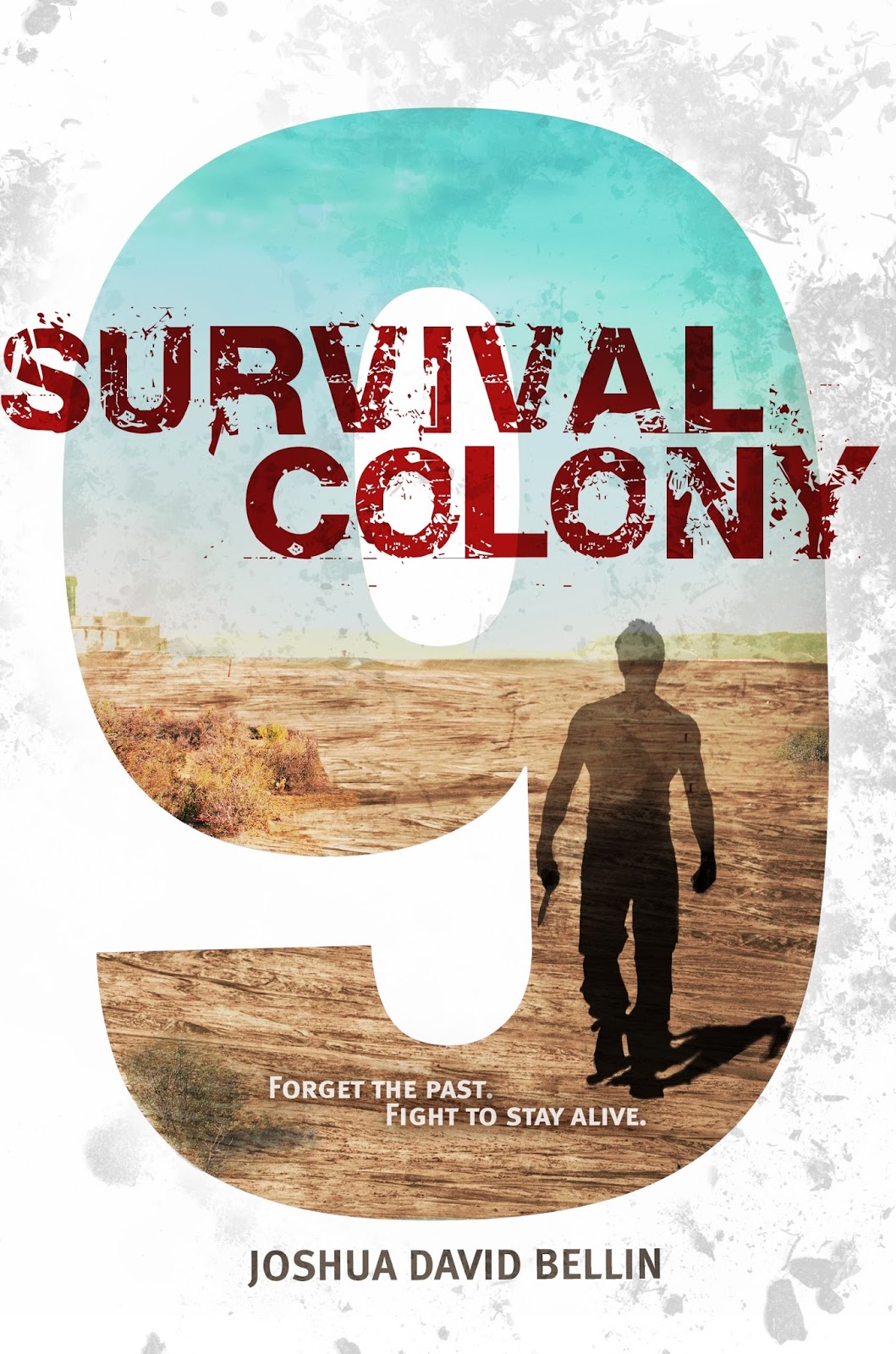
September 23, 2014 will always hold a special place in YA Guy's heart. That's because that was the date of my debut, SURVIVAL COLONY 9. I expect to have other release dates in the future--in fact, as I've mentioned, the sequel, SCAVENGER OF SOULS, comes out next summer--but there really is nothing like your first time!

So to celebrate the one-year anniversary of my debut, I've teamed up with other 9/23/14 debuts to offer a great giveaway. (United States only.) The winner receives one signed copy of each of our books, as described below:

YA Guy: signed copy of SURVIVAL COLONY 9

Christina Farley: signed copy of winner's choice in the GILDED series (GILDED, SILVERN, or BRAZEN)

Darlene Beck Jacobson: signed copy of WHEELS OF CHANGE

Kendall Kulper: signed copy of SALT & STORM

Kristen Lippert-Martin: signed copy of TABULA RASA


The contest runs for one week, starting today. Enter via the Rafflecopter giveaway below. And good luck!

a Rafflecopter giveaway

Tuesday, July 7, 2015

YA Guy Hosts... Laura Lee Anderson, author of SONG OF SUMMER!


Pittsburgh is home to lots of great kidlit authors, and one of the newest is Laura Lee Anderson, whose YA debut, SONG OF SUMMER, releases as an e-book today! Let's hear from Laura as she tells us about her book and about one of the main characters, whose deafness plays a key role in the story!

song of summer cover

The thirteen qualities of Robin’s Perfect Man range from the mildly important “Handsome” to the all-important “Great taste in music.” After all, Westfield’s best high school folk musician can’t go out with some shmuck who only listens to top 40 crap. When hot Carter Paulson walks in the door of Robin’s diner, it looks like the list may have come to life. It’s not until the end of the meal that she realizes he’s profoundly deaf. Carter isn’t looking for a girlfriend. Especially not a hearing one. Not that he has anything against hearing girls, they just don’t speak the same language. But when the cute waitress at Grape Country Dairy makes an effort to talk with him, he takes her out on his yellow Ducati motorcycle. Music, language, and culture sing back-up as love takes the melody, but just how long can a summer song last?


From the first moments that I envisioned Song of Summer, I knew that I wanted it to be in dual point of view- from Robin's perspective as well as from Carter's perspective. Which meant I had to do a LOT of research. I'm not deaf, I didn't have any deaf friends, and it had been a long time since third grade, when I taught myself the ASL alphabet so I could communicate with my best friend during Library class. Here are some things I learned about deaf culture while I was researching Song of Summer:

1) Sign language cannot be written. Like, it CANNOT be written. It is a visual language. Direct word-for-word translations are incorrect because facial expressions and body language are SO important! All of Carter's (and his family's) signed sentences are translated into English in the books because they have to be! It's impossible to write sign!

2) People who are deaf deal with: Hearing people questioning their driving ability/right to drive, hearing people shouting at them, hearing people offering them Braille menus, hearing people staring at them, hearing people showing them the one (rude) sign that they know... the list goes on. I tried to incorporate these into the book to educate hearing people on all the crap that people who are deaf go through! Go here to see more! (warning: swearing in video)

3) There are different stages and types of deafness. Most people who are deaf have some hearing available to them. The idea that people who are deaf have absolutely no hearing is usually false. Carter has next to no hearing and tells Robin that he's in the minority because of it.

4) Hearing aids are completely different from cochlear implants. So much so, that when I originally had Carter explain a cochlear implant as, "a really invasive, high-tech hearing aid," one of my friends corrected me. She told me that it would never be described as a hearing aid because the two are so different. Rather, it would be described as a "device that helps with hearing." So that's what Carter calls it in the book now! Also, cochlear implants are covered by medical insurance. Hearing aids are not usually.

I learned a lot more when I was preparing to write Song of Summer, and I am blessed to have learned a lot of it from the wonderful people at the Western Pennsylvania School for the Deaf, where I took two semesters of ASL classes and got to know some great people. One of my favorite experiences is chronicled here: When I arrived to the first class 15 minutes late and nobody was allowed to speak.

If you want to read more about Carter and his culture, go ahead and... Click here to order on Kindle from Amazon. Click here to order on Nook from Barnes and Noble. Click here to order from Kobo. Click here to order from ibooks.


Thanks, Laura! If you want to learn more about Laura and her writing, visit her website!
 

Friday, January 2, 2015

YA Guy Looks Forward to... Great Books in 2015!

Well, YA Guy's debut year has come and gone--but that doesn't mean I don't have lots to look forward to in 2015! Let's start with ten YA/MG books I'm super excited about, listed in order of their release!


Tom Isbell, The Prey. Amazing-sounding dystopian novel from one of the nicest guys (and best writers) I know. Release date: January 20.


Dianne Salerni, The Inquisitor's Mark. The sequel to the fantastic Middle Grade novel The Eighth Day. Release date: January 27.


Aisha Saeed, Written in the Stars. A terrific story from one of the leading young voices in the movement to diversify YA. Release date: March 24.


I. W. Gregorio, None of the Above. How many YA novels feature intersex characters? I'm really looking forward to this one! Release date: April 7.


Lynne Matson, Nil Unlocked. The sequel to the hugely entertaining Nil, one of my favorite books of 2014! Release date: May 12. 


Kelly Loy Gilbert, Conviction. One of the finest pure writers I've encountered in YA (or anywhere) with her debut novel about family and faith. Not to be missed. Release date: May 19.


Stephanie Oakes, The Sacred Lies of Minnow Bly. A modern retelling of a Grimm fairy tale. I've been waiting on this one for a while! Release date: June 9.


Austin Aslan, The Girl at the Center of the World. If you loved The Islands at the End of the World (and who didn't?), you'll love this sequel, which I had the good fortune to read in manuscript. Release date: August 4.


Kat Ross, Some Fine Day. An environmental thriller set in a future world of super-storms called hypercanes. The collapse of Strange Chemistry delayed the release of this book in hard copy, but it's already out as an e-book and will be available in paperback February 17!

Sarah J. Schmitt, It's a Wonderful Death. Another near-casualty of Strange Chemistry's demise, this novel about resurrection was resurrected with the help of my agent, Liza Fleissig! I've been dying (no pun intended) to get my hands on this one! Release date: not set.

I've already pre-ordered most of the books on this list, and the first two are due in mere weeks. Ready... set... read!